

The Science Behind the 6 Most Common Arabesque Mistakes — And How to Fix Them
Posted by Paul Zaichik on
What Does Your Arabesque Look Like?
An arabesque can look beautiful from a distance, but small differences in turnout, pelvic position, strength, flexibility and control can completely change the line.
That is why two dancers can lift the working leg to almost the same height and still have very different arabesques.
Look at the image below and find the number that looks closest to your Arabesque right now.

Then read the corresponding section below.
Mistake 1: The Torso Drops Forward to Get More Height
A small change in the torso can naturally occur as an arabesque becomes higher. The problem begins when the torso drops significantly forward simply to make the working leg appear higher.

Cause
If the working leg cannot continue extending behind the body while the torso remains controlled, the dancer may begin borrowing movement from the upper body.
Instead of producing more usable hip extension and back extension, the body changes the shape of the entire position.
The result can look like a higher arabesque, but the extra height is coming partly from compensation rather than from greater controlled range behind the body.
Strength & Flexibility
Several factors can contribute:
- Limited hip-extension flexibility
- Limited extension through the back
- Insufficient strength in the glutes and posterior hip muscles
- Insufficient back-extension strength
- Difficulty stabilizing the pelvis and supporting side
- Limited active flexibility
A dancer may even have enough passive flexibility on the floor but still be unable to access that same range while standing.
Solution
Rather than repeatedly forcing the leg higher, train the components that allow the leg to travel backward while the torso remains controlled.
That means developing hip-extension flexibility, back flexibility, posterior-chain strength and active control together.
The goal is not simply a higher leg.
The goal is a higher leg without having to sacrifice the shape of the Arabesque to get it.
Mistake 2: The Working Leg Won’t Stay Turned Out
You lift the leg behind you, but as it rises, the knee and thigh begin rotating inward.
This is one of the most common ways the Arabesque line begins to change.

Cause
The working leg must maintain external rotation while also extending behind the body.
If turnout cannot be maintained as the leg moves higher, the body often chooses the easier path and allows the femur to rotate inward.
Strength & Flexibility
Turnout depends on more than simply “trying harder to rotate.”
The external rotators of the hip — including the deep lateral rotators and gluteus maximus — have to be strong enough to maintain the position.
At the same time, restrictions in the opposing tissues can make external rotation harder to access and control.
This is why turnout should be trained as both a flexibility and strength problem, not only as a positional cue.
Solution
Work on turnout separately from Arabesque height.
Develop the flexibility needed to externally rotate the hip and strengthen the muscles that maintain that rotation.
Then gradually combine the turnout with hip extension.
This makes it much easier to keep the working leg turned out as the Arabesque becomes higher.
Mistake 3: The Hips Open to Make the Leg Look Higher
This compensation is extremely common.
As the working leg rises, the pelvis begins rotating open with it.
Suddenly the leg appears much higher — but the shape is no longer being produced from the same Arabesque position.

Cause
When the working hip reaches the limit of the range it can produce directly behind the body, the pelvis may begin turning outward to create additional apparent height.
The dancer has found another source of movement.
But that movement changes the relationship between the pelvis, supporting leg and working leg.
Strength & Flexibility
This can happen when there is not enough:
- Hip-extension flexibility
- Active strength in the extended position
- Turnout control
- Pelvic stability
- Back-extension ability
It can also happen when the dancer has good general flexibility but lacks the strength to control the specific Arabesque range.
As the pelvis rotates, the hamstrings, hip flexors, glutes and other muscles around the hip are placed in different mechanical positions.
That is why a dancer may feel “flexible enough” and still struggle to maintain the intended line.
Solution
Practice creating more range without immediately opening the pelvis.
Work on hip extension, turnout, pelvic control and strength independently, then combine them progressively.
The objective is not to lock the pelvis rigidly in place at all costs.
The objective is to understand when the pelvis is contributing naturally to the movement — and when it is opening primarily because the working leg has run out of controlled range.

Why Arabesque Is More Than a Back Flexibility Skill
At this point, one pattern should already be clear:
An Arabesque cannot be reduced to “stretch your back and lift your leg.”
The position depends on multiple physical qualities working together:
- Hip extension
- Turnout
- Hamstring flexibility
- Hip-flexor flexibility
- Back flexibility
- Glute strength
- Back-extension strength
- Supporting-leg strength
- Balance
- Active flexibility
- Pelvic control
EasyFlexibility’s Arabesque & Attitude Derrière program is built around developing the flexibility and strength required for the position together, rather than treating flexibility and strength as completely separate goals.
Arabesque & Attitude Derrière Strength and Flexibility Program
If your Arabesque keeps breaking down in one of these positions, the problem may not be the Arabesque itself.
It may be one specific component that is limiting the entire skill.
The EasyFlexibility Arabesque & Attitude Derrière program breaks the movement into its individual flexibility and strength requirements so you can train the areas that need the most work.
Learn more about the Arabesque & Attitude Derrière Program:
Mistake 4: The Line Looks Good — But the Leg Simply Won’t Go Higher
This is one of the most frustrating situations for dancers.
Your turnout looks reasonable.
Your pelvis is relatively controlled.
Your supporting leg looks stable.
But the working leg simply stops.

Cause
At this point, the issue may not be technique alone.
You may genuinely have reached the current limit of the active range available to you.
That limit can come from the hip, the back, the strength of the muscles lifting the leg, or several of these factors at once.
Strength & Flexibility
A higher Arabesque requires the ability to create and control extension behind the body.
That can require:
- More hip-extension range
- Greater flexibility through structures resisting hip extension
- More back-extension ability
- Stronger glutes and other hip extensors
- Stronger back extensors
- More short-range strength near the top of the movement
- Greater active flexibility
This explains why someone may be able to move the leg much farther when lying down or when another person assists them, yet cannot reproduce that range while standing.
Passive range and usable range are not the same thing.
Solution
If the shape remains good but the leg will not rise farther, stop assuming you simply need to repeat more Arabesques.
Test the individual components.
Can the hip extend farther?
Can the back extend farther?
Can you access that range actively?
Can you hold the working leg at the top without losing the position?
The answer tells you whether the next priority should be flexibility, strength, or a combination of both.
Mistake 5: The Knee or Foot Loses the Line
Sometimes the Arabesque gets higher, but the leg starts losing its finished shape.
The knee bends.
The foot loses its position.
The leg no longer looks fully lengthened.

Cause
This often happens when the dancer has enough power or flexibility to raise the leg, but not enough control to maintain all of the smaller components of the position at the same time.
The body prioritizes the biggest task — getting the leg up — and other details begin disappearing.
Strength & Flexibility
The higher the leg travels, the more demanding the position becomes.
You still need to maintain:
- Knee extension
- Turnout
- Foot and ankle control
- Length through the working leg
- Hip extension
- Pelvic organization
- Balance
If one part begins failing as the leg rises, the dancer may be training height faster than control.
Solution
Temporarily lower the Arabesque to the highest position where the entire line can still be maintained.
Then build strength and control there.
Once you can hold the turnout, knee, ankle and foot position consistently, gradually increase the height.
This turns the Arabesque into a position you actually own rather than one you can briefly reach.
Mistake 6: The Supporting Leg Starts to Bend or Collapse
The working leg may look reasonably high, but the supporting side begins giving way.
The knee bends, the hip shifts, or the body sinks downward as the Arabesque rises.

Cause
The body needs a stable base from which the working leg can move.
If the supporting side cannot maintain that base, the body may borrow movement from the supporting knee, hip or ankle in order to keep raising the working leg.
Strength & Flexibility
The supporting side plays a major role in Arabesque.
It must provide enough:
- Leg strength
- Hip stability
- Turnout control
- Balance
- Pelvic control
- Foot and ankle stability
while the other side is simultaneously moving into extension.
That is one reason Arabesque cannot be trained effectively by thinking only about the working leg.
Solution
Train the supporting side as deliberately as the working side.
Practice maintaining a strong, controlled supporting leg at lower Arabesque heights before adding greater range.
Then gradually increase the height while keeping the supporting leg stable.
When the base remains strong, the working leg has a much better foundation from which to move.
What Does Your Arabesque Tell You?
If you recognized yourself in one of the six examples, the important thing is not simply the number.
It is what that number reveals about the movement.
If you are #1:
Your body may be creating height by moving the torso rather than producing enough controlled extension behind you.
If you are #2:
Turnout of the working leg may need more specific flexibility and strength training.
If you are #3:
The pelvis may be opening to compensate for limited controlled range.
If you are #4:
Your alignment may already be good, but you may need more active hip extension, back extension or strength.
If you are #5:
You may be gaining height faster than you are gaining control of the complete line.
If you are #6:
The supporting side may need more strength, stability and control.
And for many dancers, the answer will not be just one number.
You may see elements of #2 and #3, or #4 and #5, because the Arabesque is a combination of multiple physical requirements.
That is exactly why simply repeating the finished skill is not always enough.
The EasyFlexibility Approach to Improving Arabesque
At EasyFlexibility, we break a larger dance skill into the individual physical requirements that create it.
For Arabesque, that means training the flexibility and strength of the muscles involved in hip extension, turnout and back extension, while also developing the ability to use that range in the actual position. EasyFlexibility’s existing Arabesque material specifically frames the skill as requiring both flexibility and the strength to hold the position.
Instead of asking:
“How can I force my Arabesque higher?”
a better question is:
“Which part of my Arabesque is preventing it from going higher with control?”
Once you identify that, your training becomes much more specific.
Ready to Work on Your Arabesque?
The Arabesque & Attitude Derrière Strength and Flexibility Program combines targeted flexibility work with supporting strength exercises designed specifically for the physical requirements of these dance positions.
If your Arabesque looks like one of the six examples above, this gives you a structured way to work on the individual flexibility and strength components instead of simply repeating the position and hoping it improves.
Explore the Arabesque & Attitude Derrière Program:
You might also like...
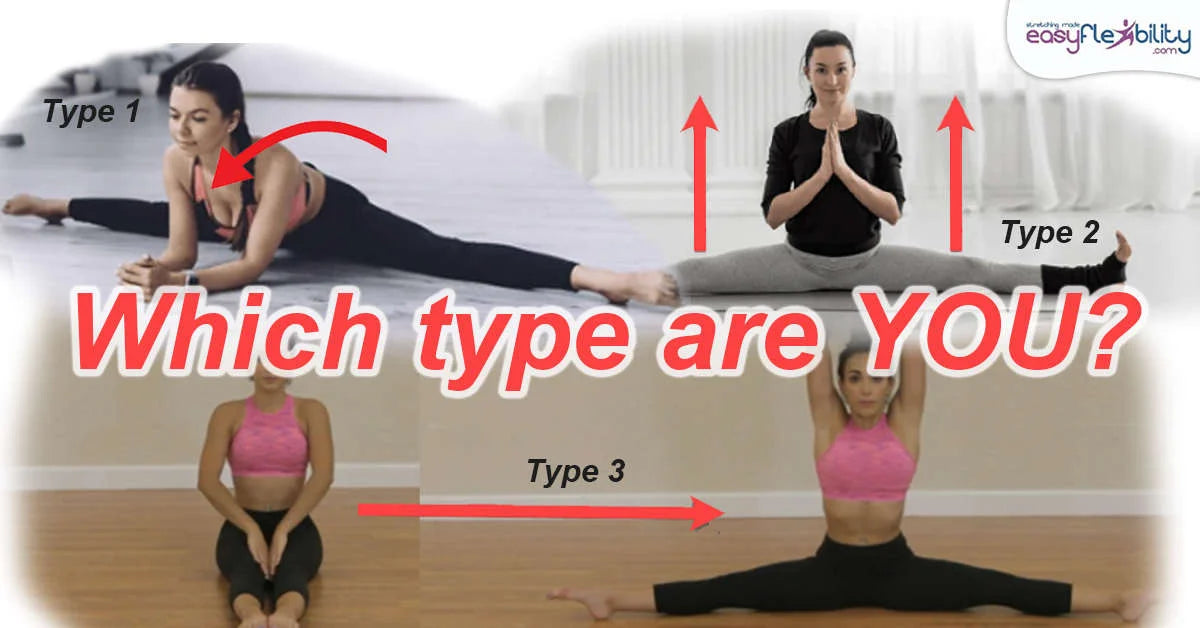
Side Split Mastery. Side split mastered? When is a side split truly mastered?
How effective is supine wall straddle or straddle waterfall for attaining a side split?
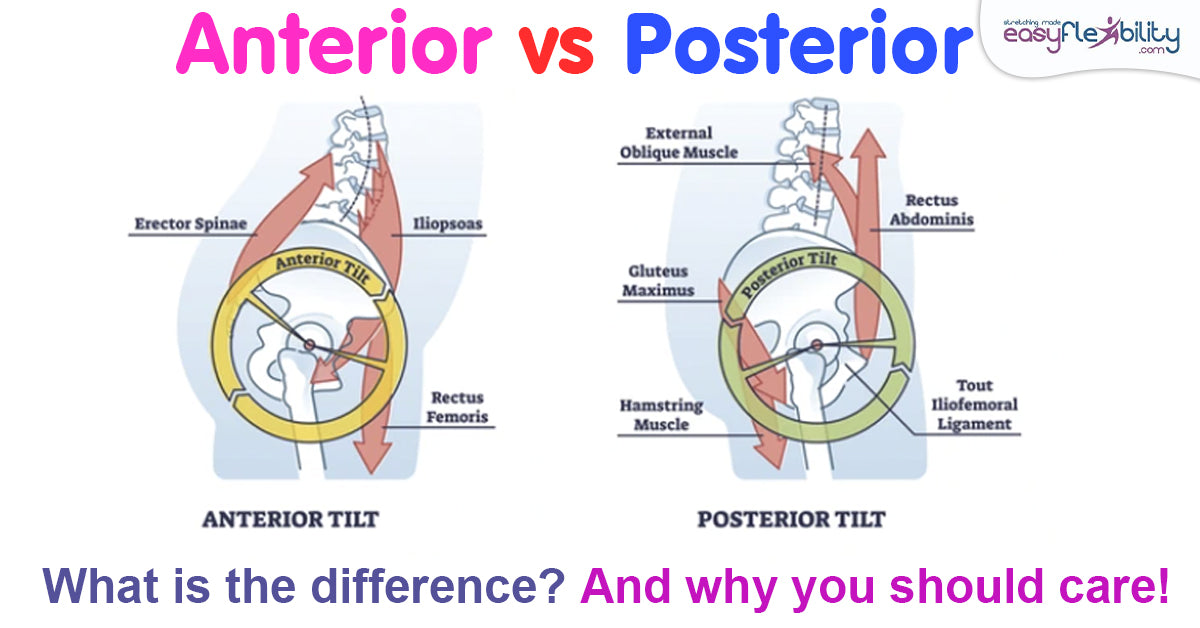
Anterior vs. Posterior Pelvic Tilt: Key Insights & Benefits
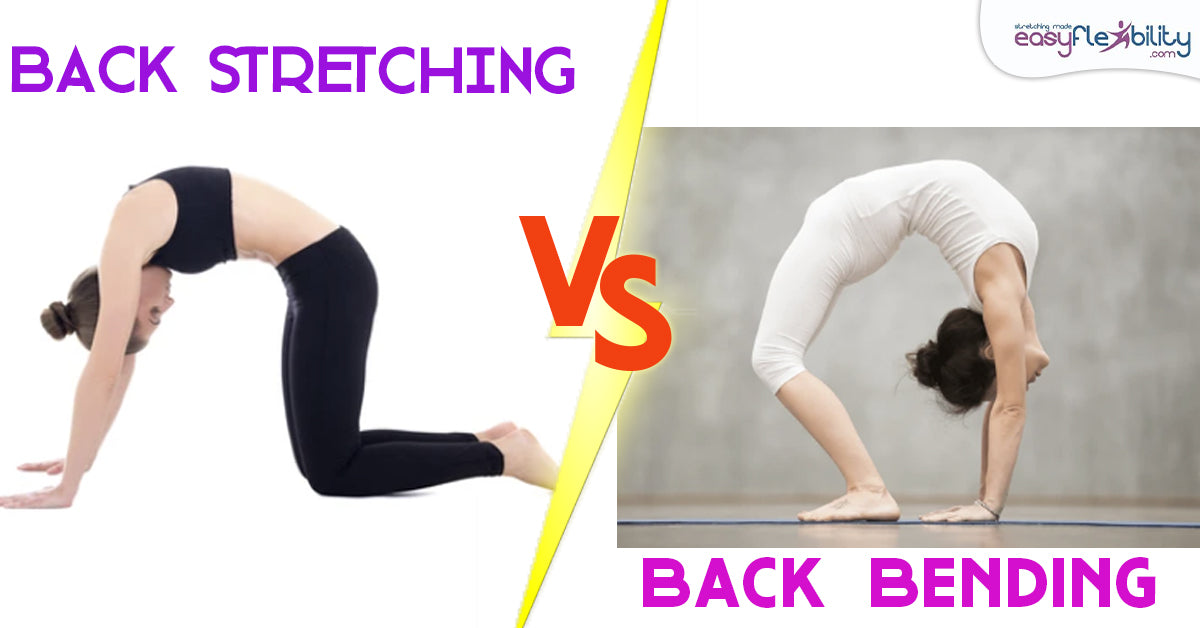
Back stretching vs back bending vs back pain training. What’s the difference?
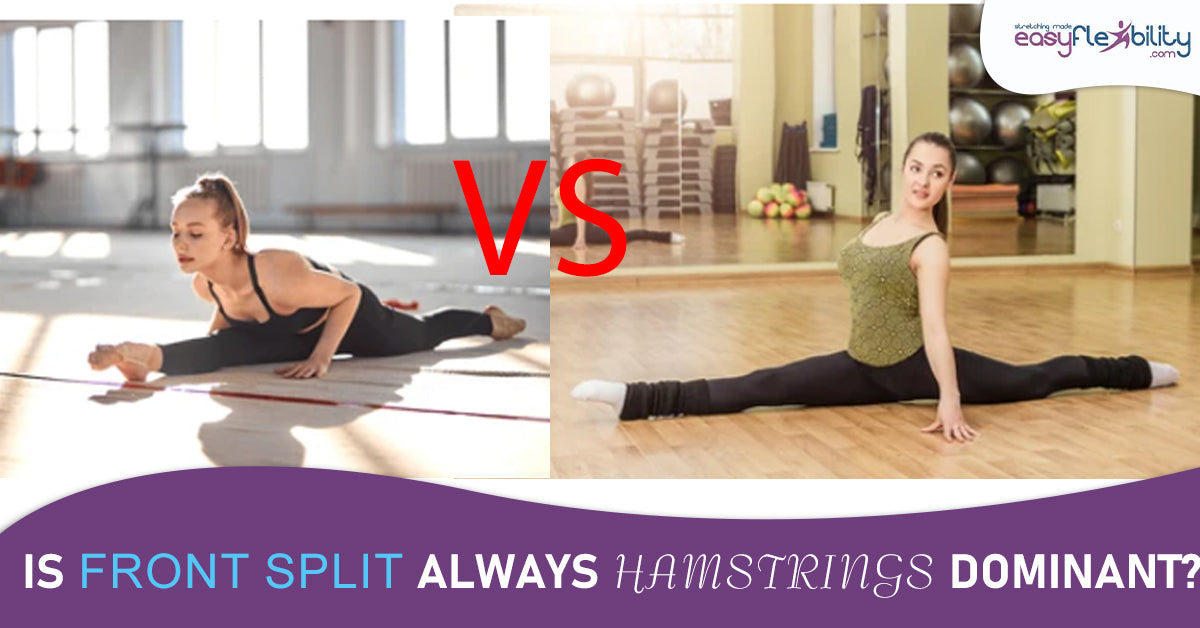
Is Front Split Always Hamstrings Dominant?
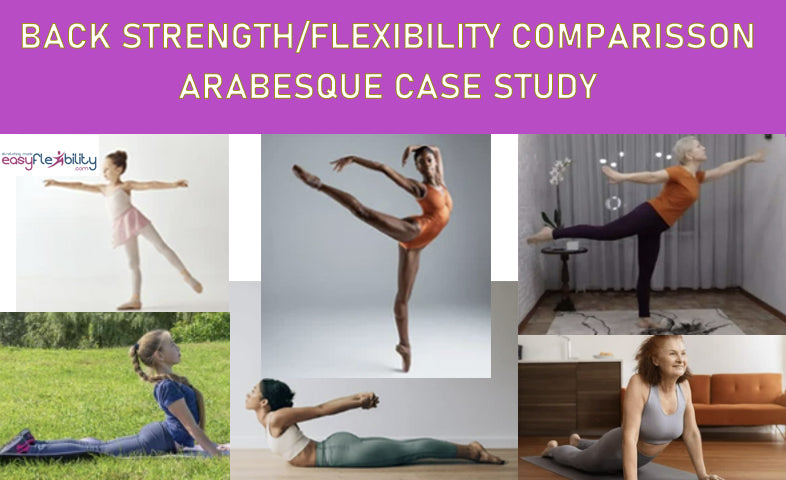
Lower back strength requirement in short ranges, in an Arabesque position, for dancers in various age groups.
Share this post
0 comment